Need to be seen quickly? Same-day and next-day appointments may be available for hives that are spreading or not settling. See our urgent dermatology appointments page or call (516) 246-8800. If you have swelling of the lips, tongue or throat, or trouble breathing, call 911.
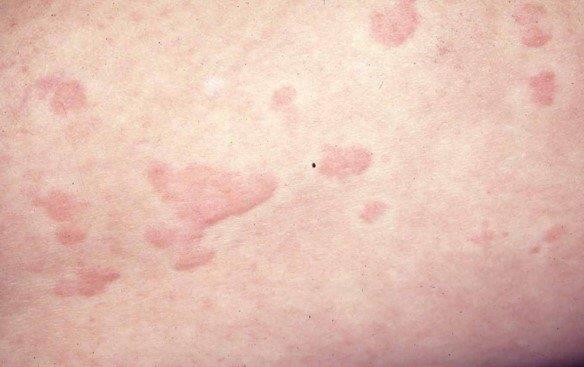
Hives can appear suddenly, itch intensely, disappear, and then return somewhere else, which can be unsettling when the cause is not obvious.
We look at timing, triggers, medications, associated swelling, and how long the episodes have been happening.
Treatment often focuses on controlling symptoms while identifying when additional evaluation is actually useful.
Call 911 for hives with trouble breathing, throat or tongue swelling, or fainting. Use prescribed epinephrine as directed. An appointment or antihistamine is not a substitute for emergency treatment.
Acute hives versus chronic urticaria
Individual welts usually disappear within 24 hours, although new ones can appear. Recurrent hives lasting more than six weeks are considered chronic. Chronic spontaneous urticaria (CSU) often has no identifiable external trigger; it is not automatically a food allergy. Pressure, cold, heat or exercise can trigger other forms of urticaria.
How we evaluate hives
Photographs can help because welts may fade before your visit. We review duration, swelling, medications and possible triggers, then select testing if the history supports it. A spot that stays in one place longer than 24 hours, bruises or hurts needs assessment for another diagnosis. See our rash evaluation page.
Hives treatments and medications
- Antihistamines: Second-generation H1 medicines such as cetirizine, fexofenadine or loratadine are commonly used. Your clinician determines the regimen; do not increase doses yourself.
- Persistent CSU: Options after inadequate antihistamine control include Xolair (omalizumab), Dupixent (dupilumab), or Rhapsido (remibrutinib) for eligible patients. These are treatments for CSU, not every type of hive.
- Selected difficult cases: Other medicines, including off-label cyclosporine, may be considered with monitoring. Repeated or long-term oral steroid use is generally avoided.
Xolair has an anaphylaxis warning. Dupixent can cause allergic reactions and other adverse effects. Rhapsido is an oral BTK inhibitor for adults and requires review of bleeding risk, liver health, interactions and planned procedures. Age eligibility differs between products. The official medication links provide detailed indications and safety information.
Recognizing hives across skin tones
Welts can be skin-colored or darker rather than bright red. Their raised texture and temporary nature are useful clues.
Common questions
Do I need extensive allergy testing?
Not routinely. Testing should follow the history rather than a broad panel without a clear suspected trigger.
Is persistent itching always hives?
No. Chronic itching without transient welts may need a different evaluation.
More information: AAD guidance on hives treatment. For non-emergency flares, ask about urgent dermatology availability.
Schedule an evaluation
Appointments are available in Garden City, Syosset, and Bellerose, NY. Book Appointment or call (516) 246-8800.