
Actinic keratoses are rough, sun-damaged spots that matter because some can progress to squamous cell carcinoma.
A few isolated lesions may be treated individually, while broader field damage may call for treatment of the surrounding sun-damaged skin as well. Options include cryotherapy, prescription field therapy, curettage, and photodynamic therapy.
Diagnosis and Treatment Options
Actinic keratoses are rough, scaly lesions caused by cumulative ultraviolet exposure. They most often appear on chronically sun-exposed areas such as the face, scalp, ears, forearms, and backs of the hands.
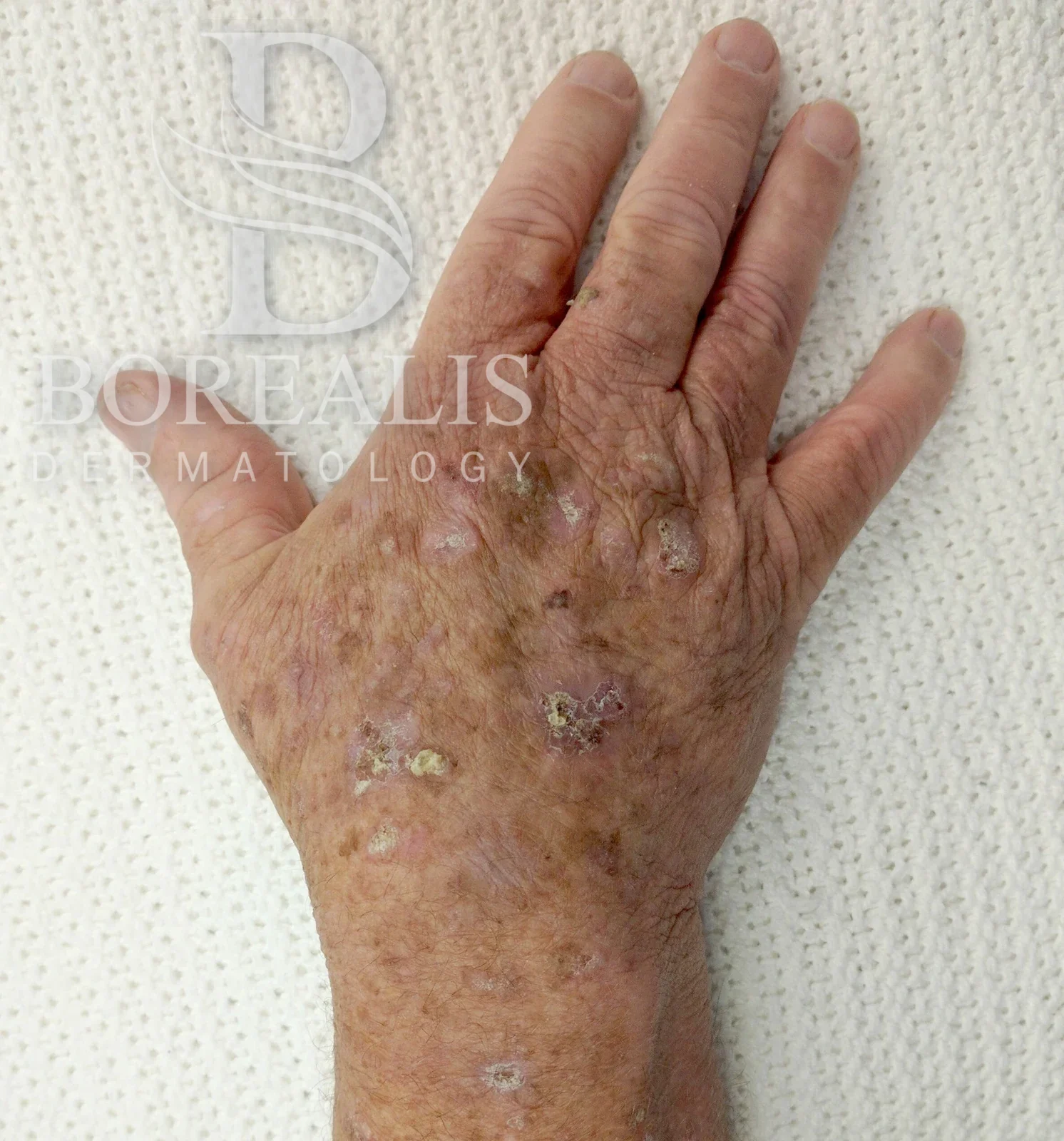
Why are they important?
Actinic keratoses are considered precancerous because a minority can progress to squamous cell carcinoma. It is not possible to predict with certainty which individual lesion will progress, so suspicious or persistent lesions should be evaluated.
What do they look or feel like?
They may feel rough or sandpaper-like and can be skin-colored, pink, red, or brown. Some are easier to feel than see. Tenderness, thickening, rapid growth, bleeding, or ulceration can warrant biopsy.
How are actinic keratoses treated?
Options include cryotherapy, topical field treatments, photodynamic therapy, curettage, and other approaches depending on the number, location, thickness, skin type, and extent of sun damage.
Prevention and follow-up
Daily sun protection and periodic skin examinations are important because actinic keratoses indicate significant cumulative UV exposure and an increased risk of additional precancers and skin cancers.
Related reading from Borealis
Explore these articles for more background and questions to discuss at your visit.